
Why You Should Complete a VO₂max Test Before Your Next HYROX Race
HYROX is know as THE hybrid fitness race. People all over the world lace up their shoes, take a deep breath, and prepare to grind through the 8 unique stations to see just how far they are able to push their body.
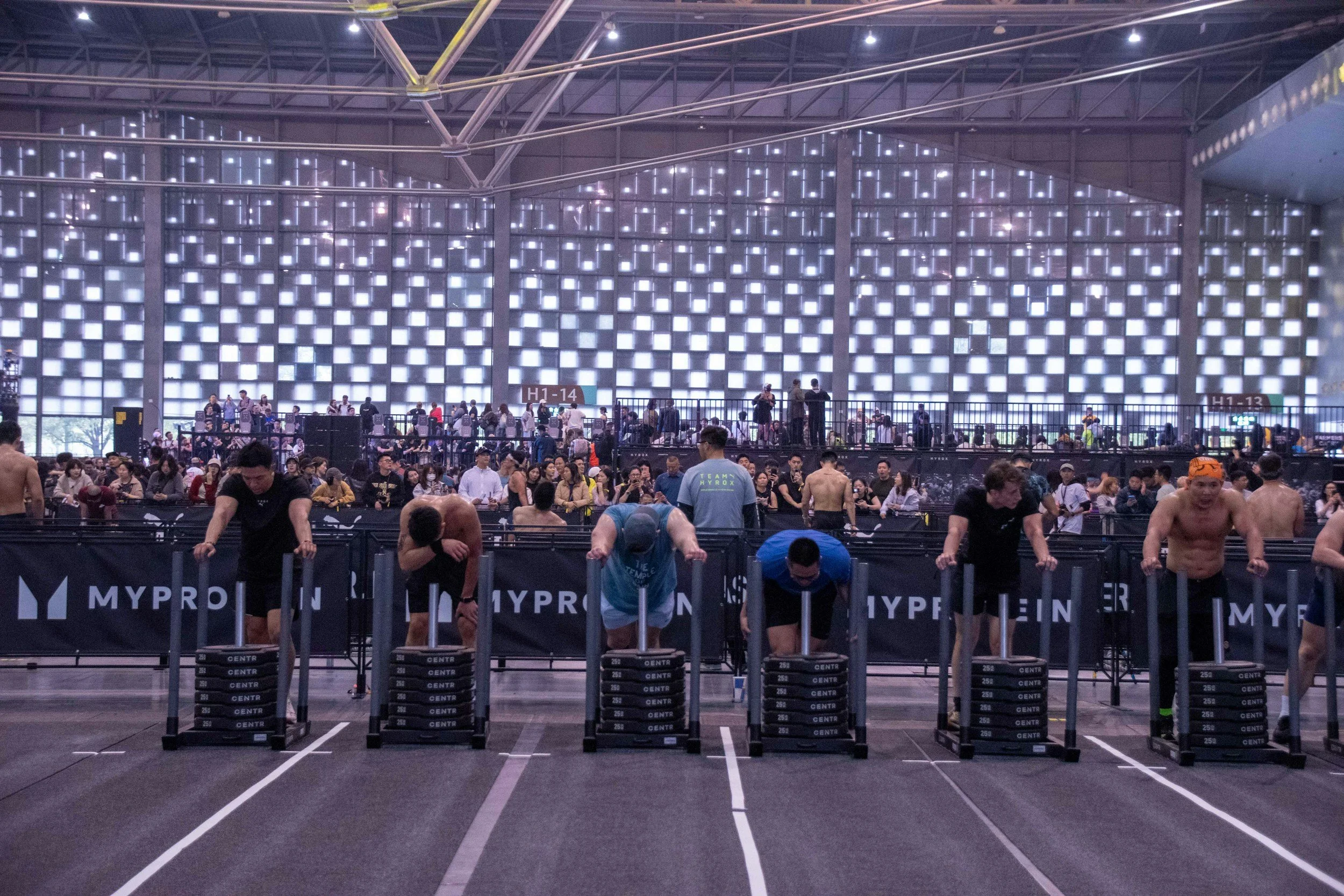
While it is true that HYROX is a great test of strength and cardiovascular fitness, most athletes spend too much time focusing on the stations and not enough time focusing on what really limits performance: The 8×1km run.
8km of running is going to either make or break your race depending on how well you are able to recover between stations while maintaining a running pace that does not drop you back in the pack. The biggest challenge is how hard can you push your aerobic system without burning out due to fatigue and lactate accumulation. This is where VO₂max testing comes in.
A standard HYROX race follows the same sequence each time:
1 km run
1,000 m SkiErg
1 km run
50 m sled push
1 km run
50 m sled pull
1 km run
80 m burpee broad jumps
1 km run
1,000 m row
1 km run
200 m farmer’s carry
1 km run
100 m sandbag lunges
1 km run
100 wall balls
This format creates a specific physiological challenge. You need enough strength to complete each station efficiently, but you also need an aerobic system capable of recovering while you continue moving. A VO₂max test can help determine whether your biggest performance opportunity is improving your aerobic ceiling, building a larger sustainable base, raising your threshold pace, or improving your ability to tolerate repeated surges above threshold.
VO₂max: Your Aerobic Ceiling
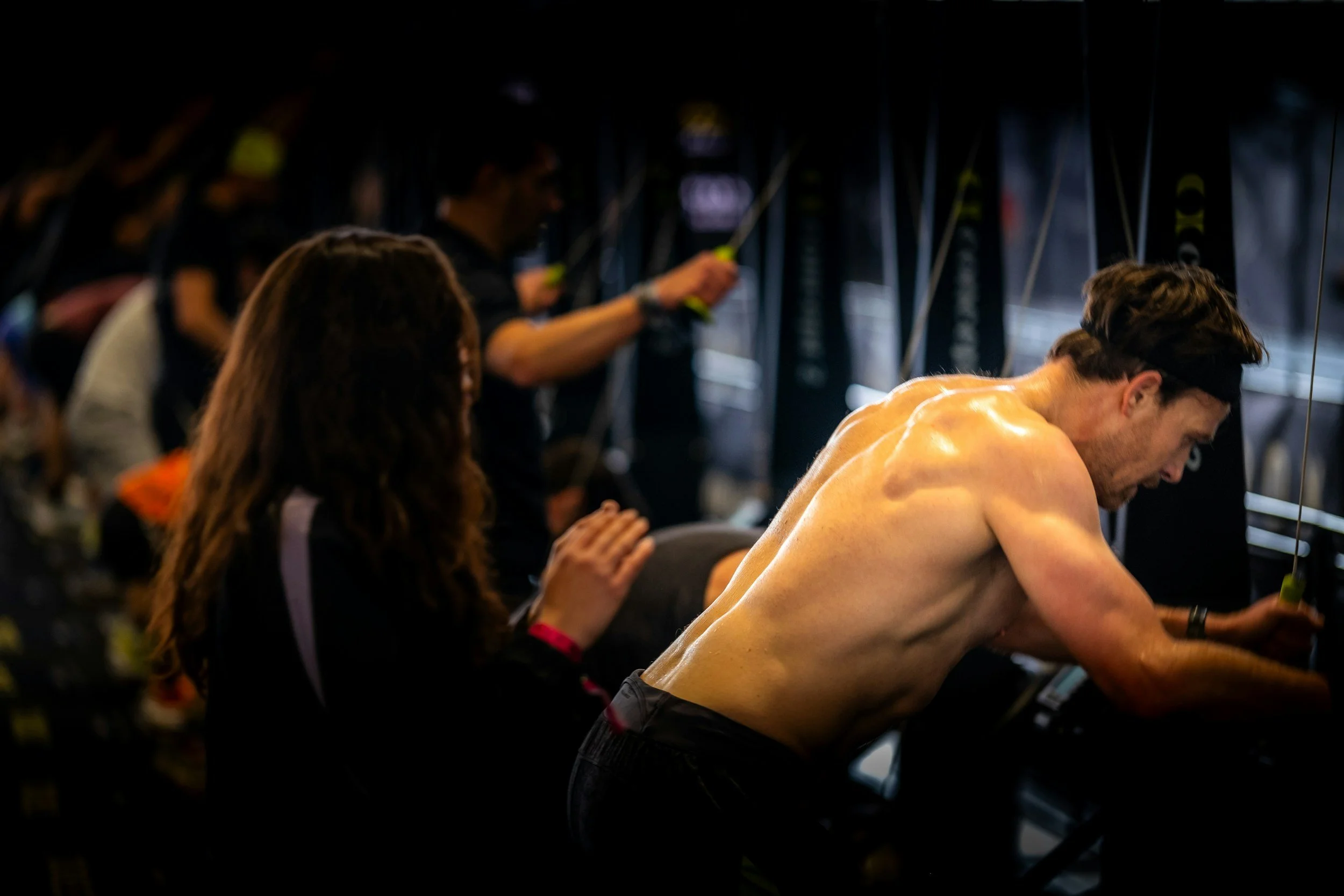
VO₂max is the highest rate at which your body can take in, transport, and use oxygen during intense exercise. It reflects the integrated capacity of your cardiovascular and muscular systems.
For HYROX athletes, VO₂max matters because it sets the upper limit of your aerobic engine. Two athletes may be able to run a fresh 1-kilometre interval at a similar pace. The difference in performance often becomes clearer after the sled push, burpee broad jumps, or sandbag lunges. The athlete with the better-developed aerobic system is more likely to settle back into a quick and efficient running rhythm instead of progressively slowing down due to inefficient oxygen utilization.
A higher VO₂max does not guarantee a faster HYROX time. Strength, movement efficiency, pacing, grip endurance, and running economy also matter. However, a low aerobic ceiling can become a major bottleneck. It limits how much oxygen-dependent energy production is available when work rates start to become intense.
Beyond VO₂max (the ceiling of aerobic performance), there are other metrics that are also valuable to calculate during your VO₂max test: your lactate thresholds. Your lactate thresholds will tell us at what percentage of your maximum aerobic output you can sustainably exercise. Not only do you want a high ceiling, but you want to be able to work at a high percentage of that ceiling without overproducing lactate, accumulating fatigue, and ultimately hindering your performance potential.
LT1: The Foundation Beneath Your Race Pace
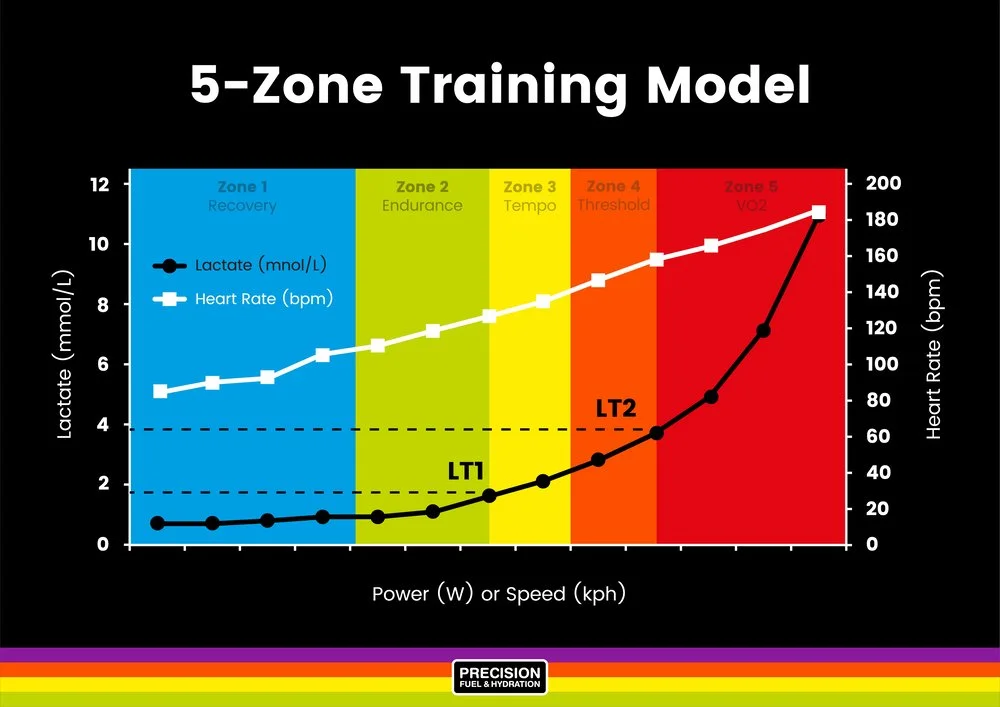
The first lactate threshold, commonly called LT1 or the aerobic threshold, is the intensity at which blood lactate begins to rise meaningfully above baseline. Below LT1, your body can maintain a relatively stable metabolic state for a long period. As you move above it, energy demand increases and fatigue begins to accumulate more quickly.
LT1 is especially important for HYROX because the race is not one continuous maximal effort. You repeatedly move between running and functional stations. Even if parts of the race occur well above LT1, a stronger aerobic base improves your ability to recover between harder efforts.
An athlete with a well-developed LT1 can complete more training volume at a higher pace, recover more effectively between sessions, and maintain better control during the early kilometres of a race. They will also be able to hold a higher running pace without accumulating more fatigue after the strength stations.
Improving LT1 generally requires a consistent volume of low-to-moderate intensity aerobic training. This is often called Zone 2 training, although zone definitions vary. For a HYROX athlete, it can include easy running, incline treadmill work, cycling, rowing, or SkiErg sessions. Running should still remain a priority because eight kilometres of the event are completed on foot.
LT2: The Line You Do Not Want to Cross Too Early

The second lactate threshold, often called LT2, is the upper boundary of sustainable high-intensity aerobic work. Once you move above LT2, lactate production and other markers of metabolic disturbance rise rapidly. The problem is that exercise above this threshold is associated with a progressively less stable internal environment and a limited time to exhaustion. Athletes with a high LT2 are able to better deal with accumulating lactate and metabolic waste products, shuttling them out of the working muscles to allow the muscle to continuing exercising at a high work rate.
For HYROX, LT2 is the line that you need to cross with extreme caution.
If you push the first sled too aggressively, run the early kilometres above your sustainable intensity, or attack the burpee broad jumps without control, you may spend too much time above LT2. That decision can affect the rest of your race. The later runs slow down. The sandbag lunges become more expensive. The final wall balls turn into fragmented sets with longer breaks. Your body cannot sustain prolonged exercise above LT2, and willing yourself past it will lead to a world of hurt and poor performance.
Improving LT2 allows you to sustain a faster pace before this rapid accumulation of fatigue occurs. Threshold intervals, controlled tempo runs, longer repetitions, and carefully structured compromised-running sessions can all play a role.
For example, running intervals immediately after sled work or rowing can help you practise returning to a controlled pace while carrying fatigue. However, these sessions are most useful when they are prescribed with a clear purpose. Simply making every workout exhausting does not guarantee better adaptation.
Testing Shows Which Limiter Matters Most
A VO₂max assessment should provide more than one headline number. Ideally, it should identify your VO₂max, threshold heart rates, threshold running speeds, and individualized training zones. When blood-lactate sampling is included, LT1 and LT2 can be directly assessed. With respiratory gas analysis alone, the corresponding ventilatory thresholds, VT1 and VT2, can be used to estimate lactate thresholds.
The relationship between these markers is often more useful than any single result, and this is why you want someone with both exercise physiology and clinical expertise.
One athlete may have a relatively high VO₂max but a modest LT2. Their ceiling is strong, but they cannot sustain a high enough percentage of it. Another athlete may have a respectable LT2 but a limited VO₂max. They are efficient with the engine they have, but the engine itself needs to become larger. A third athlete may have adequate physiology but poor station efficiency, excessive muscular fatigue, or pacing errors.
These athletes should not follow identical training plans.
Train the Race You Are Actually Entering

HYROX rewards athletes who can combine aerobic capacity, sustainable speed, strength endurance, and intelligent pacing. You do not need to become a pure distance runner. You also should not prepare for the race as though it is simply a circuit class with occasional jogging.
The eight 1-kilometre runs are not recovery periods. They are a major part of the race.
Testing your VO₂max and thresholds gives you a clearer starting point. It can help you decide how much of your training should focus on aerobic volume, threshold development, higher-intensity intervals, compromised running, or station-specific strength endurance.
The goal is not to collect more data. The goal is to train the right limiter, pace the race intelligently, and arrive at the final wall balls with enough capacity left to finish well.