

Body Composition & Metabolic Testing in Toronto
Go beyond scale weight with objective data on muscle, fat, and resting metabolic rate — then leave with practical guidance for training, nutrition, and body recomposition.
Body composition and metabolic testing can help you better understand what is actually changing in your body, how much energy your body uses at rest, and what that means for training, nutrition, performance, and long-term health.
Whether your goal is to lose fat, build muscle, improve performance, support recovery, or simply track progress more accurately, testing gives you better information than weight alone.
The scale does not tell the whole story
Body weight is easy to measure, but it is not very specific.
A change on the scale does not tell you whether you lost fat, gained muscle, retained water, under-fuelled your training, or simply had a normal day-to-day fluctuation. Two people can weigh the same amount and have very different levels of muscle mass, body fat, strength, fitness, and metabolic needs.
This is where body composition and metabolic testing can be useful.
Instead of relying only on weight, estimates, or fitness watch calculations, testing gives you a clearer picture of what is happening and what to adjust next.
This is not about chasing a perfect number. It is about using better data to make better decisions.


What is body composition and metabolic testing?
Body composition and metabolic testing combines two types of information:
Body composition testing looks at the estimated amount and distribution of muscle, fat, and lean mass.
Resting metabolic rate testing estimates how much energy your body uses at rest.
Together, these tests can help answer practical questions such as:
Am I actually losing fat or just losing weight?
Am I building or maintaining muscle?
How much energy does my body use at rest?
Are my calorie targets based on realistic information?
Is my training supporting my body composition goals?
Do I need to adjust my nutrition, strength training, or recovery?
Testing does not replace good coaching, nutrition habits, or consistent training. It gives you a better starting point and a clearer way to track whether your plan is working.

Who is this useful for?
Body composition and metabolic testing can be useful for people who want a more objective way to understand their progress.
This may include people who are:
Trying to lose fat without relying only on scale weight
Trying to build muscle or improve strength
Working on body recomposition
Returning to training after an injury or time away
Training for running, HYROX, endurance, or strength goals
Unsure how much they should be eating
Concerned that they may be under-fuelling their training
Frustrated by a lack of progress despite exercising consistently
Interested in tracking health and fitness changes over time
Looking for more objective information than a bathroom scale or wearable estimate
This service is not only for athletes. It is for anyone who wants better information about body composition, metabolism, and progress.
What type of testing is available?
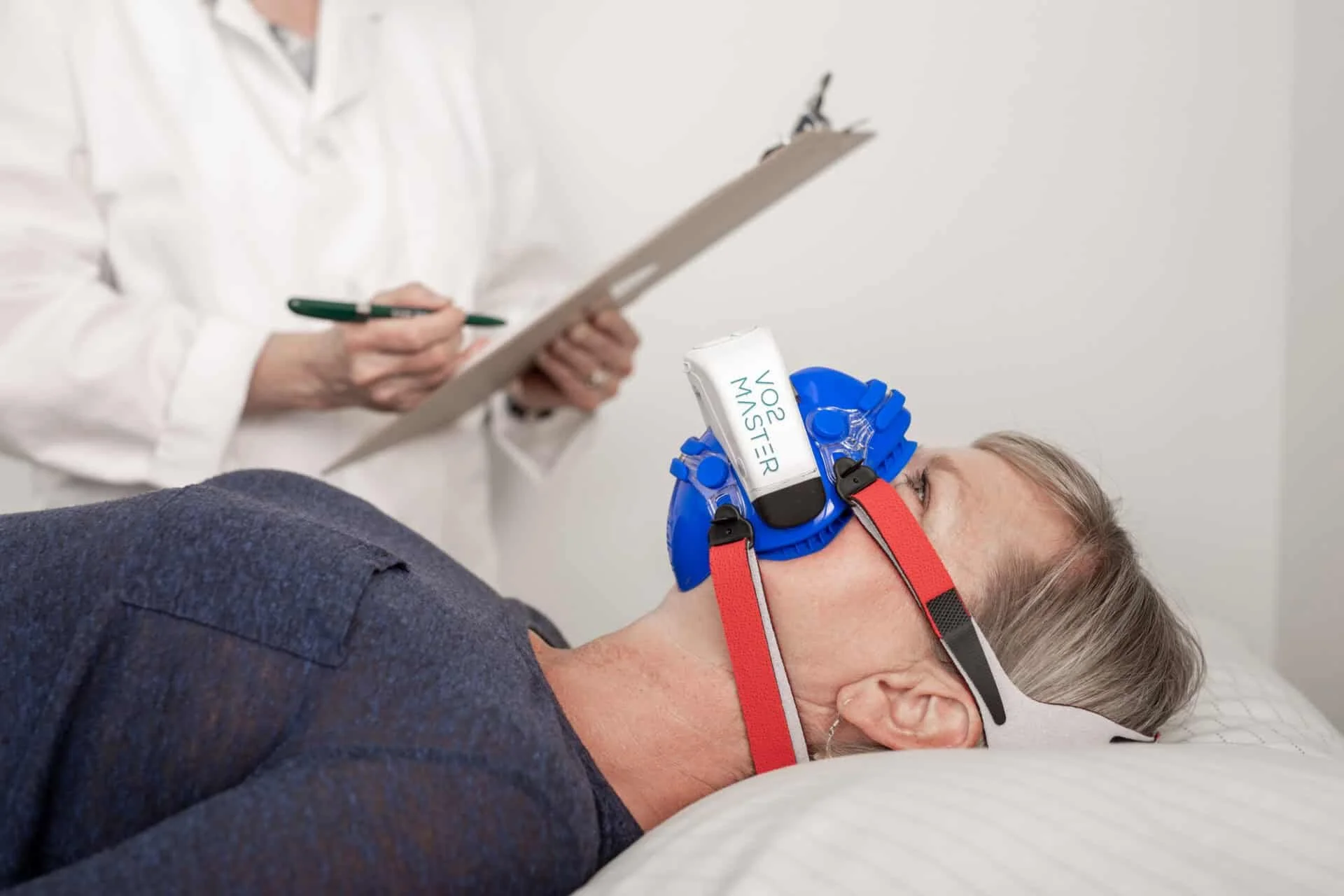
The assessment can include InBody body composition testing, resting metabolic rate testing, or both together as a combined profile.
InBody body composition scan
An InBody scan estimates body composition, including body fat, lean mass, skeletal muscle mass, and segmental lean mass distribution.
This can help you better understand changes in muscle and fat over time, rather than relying only on body weight.
InBody testing can be especially useful when your goal is body recomposition, because body weight may stay relatively stable even when meaningful changes are happening.
Resting metabolic rate testing
Resting metabolic rate, or RMR, is an estimate of how much energy your body uses at rest.
Most calorie targets are based on prediction equations using age, height, weight, sex, and activity level. Those estimates can be useful, but they are still estimates.
RMR testing provides a more individualized measurement of baseline energy expenditure. This can help inform calorie targets for maintenance, fat loss, muscle gain, or performance goals.
Practical interpretation
The value of testing is not just receiving a report.
The value is understanding what the numbers mean, what they do not mean, and how they should influence your next steps.
Your results are interpreted in the context of your goals, training, injury history, exercise habits, and current lifestyle.

Body recomposition: losing fat, building muscle, or both
Body recomposition means changing the relative amount of fat and lean mass on your body.
For some people, the main goal is fat loss. For others, it is building muscle, improving strength, supporting sport performance, or making sure that weight loss is not coming at the expense of lean tissue.
This matters because the scale can be misleading.
You may be making progress even if your weight is not changing much. You may also be losing weight in a way that is not ideal if a meaningful amount of that weight is coming from lean tissue.
Body composition testing helps provide a clearer picture.
For health, performance, and long-term body composition, maintaining or building muscle is usually important. This is especially true for people who are strength training, running, returning from injury, or trying to improve long-term function.
Body composition testing helps shift the focus away from weight alone and toward more useful questions:
Are you maintaining muscle while losing fat?
Are you gaining lean mass during a strength phase?
Are changes happening symmetrically?
Is your current plan producing the intended result?
Do your training and nutrition habits match your goal?
This creates a better feedback loop than simply weighing yourself and guessing.
Metabolic testing can add another layer by helping estimate how much energy your body uses at rest. When interpreted together, the results can help guide more realistic decisions around training, nutrition, and retesting.
How to prepare for testing:
For best results, try to keep testing conditions as consistent as possible, especially if you plan to retest in the future.
Before your appointment:
Avoid heavy exercise immediately before testing
Avoid a large meal right before testing
Stay normally hydrated
Avoid alcohol the day before testing when possible
Wear comfortable clothing
Try to test under similar conditions each time you retest
For resting metabolic rate testing, you may be given more specific preparation instructions when booking.
Frequently Asked Questions
Still have questions? Take a look at the FAQ or reach out anytime. If you’re feeling ready, go ahead and book an appointment.
-
InBody testing is useful for tracking body composition trends, but it is not perfect.
Hydration, food intake, exercise, and testing conditions can affect results. For that reason, the most useful approach is to test under similar conditions each time and focus on trends rather than overreacting to one scan.
-
It depends on the question you are asking.
Scale weight tells you total body weight. Body composition testing gives more context by estimating muscle, fat, and lean mass. If your goal is fat loss, muscle gain, or body recomposition, body composition testing is usually more informative than weight alone.
-
Resting metabolic rate is an estimate of how much energy your body uses at rest.
It represents the baseline energy your body requires for basic physiological functions before factoring in exercise, daily movement, and digestion.
-
No test can tell you the perfect calorie target with complete certainty.
RMR testing gives a more individualized estimate of baseline energy expenditure. That number can help guide calorie targets, but your actual needs also depend on activity level, training, goals, recovery, and how your body responds over time.
-
Yes. Body composition and metabolic testing can help you track whether weight loss is actually coming from fat and whether your calorie targets are realistic.
The goal is not just to lose weight. The goal is to lose fat while preserving as much lean tissue, performance, and health as possible.
-
Yes. InBody testing can help track changes in lean mass over time, while RMR testing can help estimate whether your energy intake is likely supporting muscle gain.
If you are strength training consistently but not seeing progress, testing may help clarify whether your plan needs adjustment.
-
No.
Athletes may benefit from this testing, but it is also useful for active adults, people returning to exercise, people working on body recomposition, and anyone who wants a clearer baseline.
-
It can provide useful information.
Many people assume their metabolism is slow based on difficulty losing weight. RMR testing gives a more objective estimate of resting energy expenditure. From there, we can interpret the result in context rather than guessing. Your metabolism may be slow, but there are also ways to increase metabolism once we see the entire picture.
-
VO2max testing is conducted at Thrive Longevity training with is a partner clinic of Back in Balance Clinic. The address is 518 Yonge St, Toronto, ON M4Y 1X9.