
If Your Treatment Never Changes, Is It Actually Treatment?

There is a reason that as chiropractors we give patients treatment plans that include multiple visits. But that is not because we need to do the same treatment that many times. It is to allow us to see how your respond to treatment, your progress in mobility and strength, if you are on your way to reaching your goals, and to support you in your journey back to health or towards performance.
Unfortunately, that is not how care works in many clinics. I hear it from patients all the time:
You show up to the clinic. Your therapist asks whether the same area is still sore. You receive roughly the same treatment as last time. You are told to continue the same exercises. If you ask why things are not changing, you are told you need to be patient. You book another appointment.
To be clear, repetition is not always a problem. Some treatments are helpful and should be repeated. Some exercises need time before they are progressed. Recovery is rarely linear, and not every appointment needs to look completely different.
But there is an important difference between a consistent treatment plan and an automatic one.
Whether you are seeing a chiropractor, physiotherapist, massage therapist, or another rehabilitation professional, your care should evolve as you evolve. Your treatment should not feel like a routine being performed on a body part. It should be an ongoing clinical decision-making process that is shared between you and your therapist.
Your therapist should be asking better questions

A treatment visit should not simply be:
“How is your back?”
“Still sore.”
“Okay, lie down.”
What has changed since the last appointment? What activities are easier? What is still difficult? Did the previous treatment help? Are your exercises becoming too easy? Have your symptoms changed in location, intensity, or pattern? Are you closer to the goal that brought you into the clinic in the first place? Are you feeling more in control of your condition? What have your learned since the last time we spoke?
The questions should change as you improve or don’t improve as expected.
Early in your recovery, the priority may be reducing pain enough that you can sleep properly or get through the workday. Later, the priority may be restoring strength, improving mobility, rebuilding confidence, or preparing for the demands of your sport.
If your therapist is not asking poignant questions, they are not treating you as an individual- they are going through the motions. It is not unreasonable to keep the treatment plan the same as the visit before, but there should be a reason why it is staying the same- not staying the safe by default.
Your treatment plan should progress as you progress
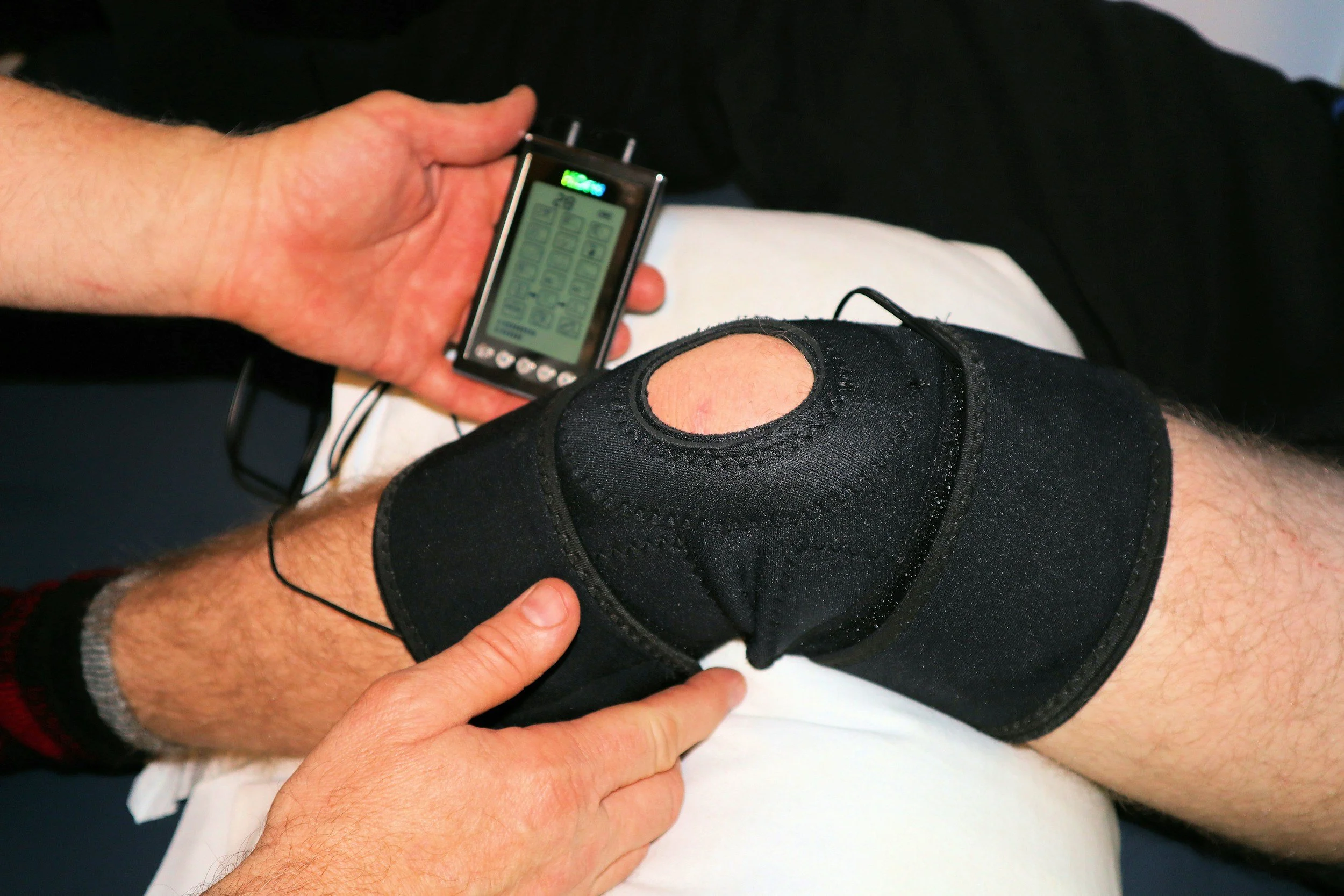
Rehabilitation exercises are not a box to check. Manual therapy is not a cure in isolation. Pain-modifying modalities are not going to get you back to full function.
If you have been doing the same three basic exercises for six weeks and they are no longer challenging, your program may need to move forward. As your capacity improves, the exercises should usually become more demanding, more specific, or more closely connected to the activities you want to return to.
The same principle applies to hands-on treatment.
Manual therapy can be useful. It may help reduce symptoms, improve movement, or create an opportunity to exercise more comfortably. But it should have a purpose. It should be part of a broader plan, not an endless default.
Each component of the treatment plan should be done at a specific time with a specific purpose. Something that worked on week 1 is not going to work on week 6. Your body needs different interventions at different intensities as it heals, grows, and improves over time, otherwise you are just going through the motions to “check the box” that you went to therapy.
The question is not whether hands-on treatment, stretching or TENS is good or bad.
The question is whether it is helping you move toward something better.
If the plan is not working, the plan should change
This is where good clinical care becomes most obvious.
If you are not improving as expected, the answer should not automatically be more of the same treatment for an indefinite period of time.
You do not need infinite patience, you need a plan.
Is the original diagnosis or working hypothesis still reasonable? Are there contributing factors that were missed? Is the exercise dosage appropriate? Do the goals need to be adjusted? Does the plan need to become more active? Is another healthcare professional better suited to help? Is further investigation warranted?
Changing direction is not a sign that your therapist has failed. It is a sign that they are paying attention.
No clinician gets every decision right on the first attempt. The problem is not that a plan sometimes needs to change. The problem is when a plan is clearly not working and no one is willing to reconsider it.
People are unique, what works for one person may not work for another. It is ok to not progress as fast as expected, and it is ok to give things a little bit more time, but that should be decided with good clinical decision making, not because your therapist is too busy to change.
Good care is also not protocol based

Evidence-based care is sometimes misunderstood as simply following the research.
Research matters enormously. It helps clinicians understand which treatments are supported, which approaches are unlikely to help, and when certain symptoms may require a different level of investigation. It gives us a foundation for making better decisions.
But research cannot tell your therapist exactly what to do with every person who walks into the clinic.
Two people with similar back pain may need very different plans. One may be trying to return to lifting weights. Another may need to tolerate sitting through a full workday. Another may be worried about being able to pick up their child without pain. We all have different starting points, different backgrounds, different skills and different fears.
Good treatment should be based on a combination of the best available evidence, your personal history, your current symptoms, your goals, your preferences, and your therapist’s clinical experience.
Evidence-based care is less like a recipe and more like buffet.
There are a list of things that are likely to improve a given condition, and what combination of those things in what dosage are what you and your therapist should discuss and decide upon together.
Clinical experience should never replace evidence. But evidence still needs to be interpreted and applied thoughtfully.
A protocol is not a substitute for clinical reasoning.
You should understand the plan
You do not need a lecture on anatomy or biomechanics every time you attend an appointment.
But you should have a basic understanding of what your therapist is trying to accomplish.
What is the current priority? Why has a particular treatment or exercise been selected? What should improve over the next few weeks? What can you do outside the clinic to help yourself? When will the plan be reassessed? What happens if you stop progressing?
A treatment plan does not need to be complicated. It does need to be intentional.
The goal is not to demand that every appointment looks completely different. Some parts of a good plan should remain consistent.
The better question is this: Does every visit still have a reason?