

Running Analysis in Toronto
A clinical running assessment for runners dealing with pain, recurring injuries, form concerns, or performance plateaus.
Running pain is rarely caused by one thing.
Your stride, strength, mobility, training load, footwear, recovery, and injury history can all influence how your body tolerates running. A running analysis helps identify the factors that may be contributing to pain, inefficiency, or stalled progress — so your plan is based on more than guesswork.
This assessment combines video running analysis, movement testing, injury history, and practical clinical reasoning to help you understand how you run, what may be limiting you, and what to do next.
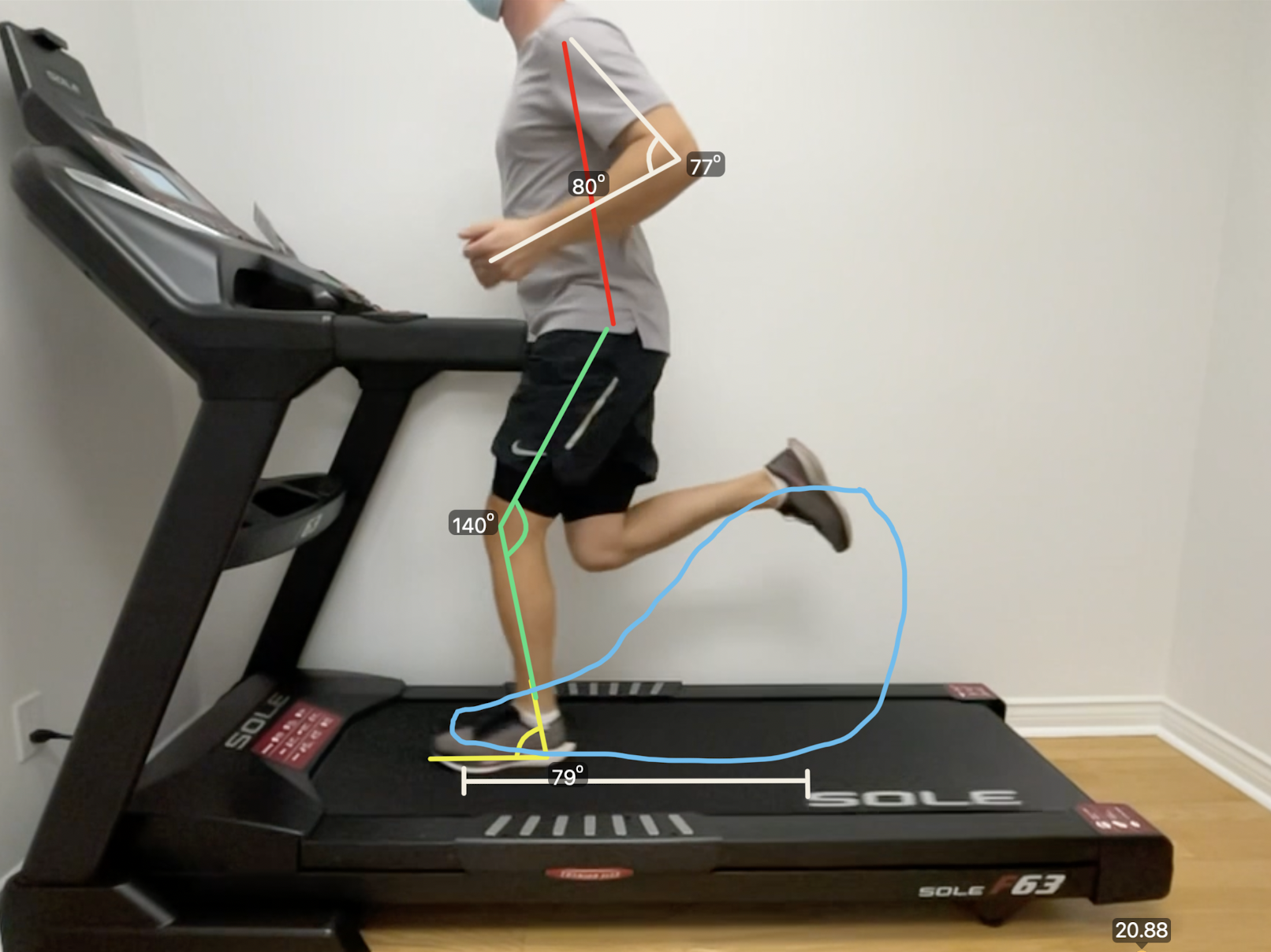
What is a Running Analysis?
A running analysis is a structured assessment of how you run and how your body supports running.
It usually includes video review of your running mechanics, but the goal is not simply to label your stride as “good” or “bad.” Running form only matters when it is interpreted alongside your symptoms, training history, strength, mobility, tissue tolerance, and goals.
For some runners, the main issue is mechanics. For others, it is training load, recovery, strength capacity, footwear changes, or a return-to-running plan that progressed too quickly. The goal is to identify the most relevant factors for you, then build a practical plan around them.
If you want to learn more about running mechanics, training programs, performance testing, and other exercise and performance topics, you can check out the resources section!

Who is a Running Analysis for?
A running analysis can be useful if you are trying to solve a recurring problem, return from injury, or make better decisions about your training.
It is especially helpful for runners who:
Have pain when running
Knee pain, hip pain, Achilles pain, shin splints, plantar fascia symptoms, low back pain, and recurring “niggles” often need more context than rest, stretching, or shoe changes alone.
Keep getting the same injury
If the same issue keeps returning when mileage, speed, or intensity increases, the problem may involve a mismatch between your current capacity and the demands of your training.
Want to improve running efficiency
Small changes in cadence, stride length, posture, strength, or load management may help reduce unnecessary strain and make running feel smoother.
Are training for a race or performance goal
If you are preparing for a 5K, 10K, half marathon, marathon, HYROX, or another endurance event, understanding your running mechanics can help guide smarter training decisions.
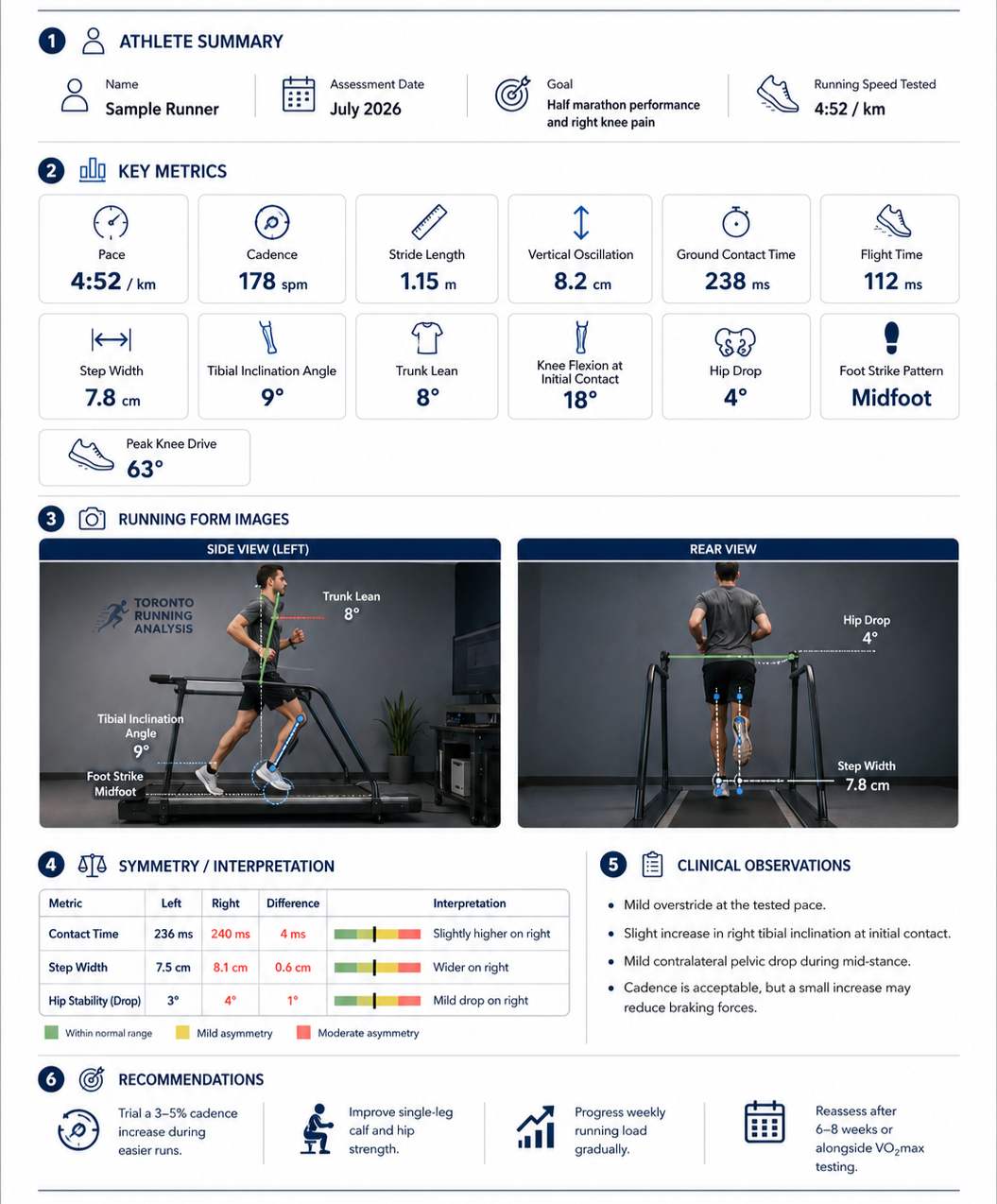
What we assess, and what you leave with:
The assessment is designed to look at the runner, not just the stride.
Depending on your goals and symptoms, your running analysis may include:
Running video assessment
Review of cadence, stride length, foot strike, posture, trunk position, hip control, overstriding, vertical movement, and general running mechanics.
Injury and training history
A detailed look at your current symptoms, previous injuries, weekly mileage, recent training changes, speed work, hills, footwear, recovery, and race goals.
Strength and movement testing
Assessment of relevant mobility, strength, balance, control, and load tolerance. This may include single-leg strength, calf capacity, hip control, trunk control, or other tests based on your presentation.
Clinical interpretation
Your findings are interpreted in context. The goal is not to chase perfect form. The goal is to understand what matters most for your pain, performance, and training.
Practical recommendations
You leave with clear next steps. This may include running cues, exercise priorities, training modifications, return-to-running guidance, or a rehab plan.

Pain Is Not Always a Form Problem
Many runners are told their pain is caused by heel striking, pronation, weak glutes, tight hips, or poor posture. Sometimes those factors matter. Often, they are only part of the picture.
Running injuries usually happen when the demand of training exceeds what the body is currently prepared to tolerate. That can involve mechanics, but it can also involve mileage, intensity, recovery, sleep, stress, strength, previous injury, or a sudden change in shoes, terrain, or training structure.
That is why this assessment does not focus on finding one visual “flaw” and forcing a generic form correction. Instead, we look at how your body is handling the demands of running and what changes are most likely to help.
Beyond just Running Analysis, we offer a variety of other services for runnings including VO2max testing, injury management and rehabilitation, and functional movement analysis with associated strength program planning.
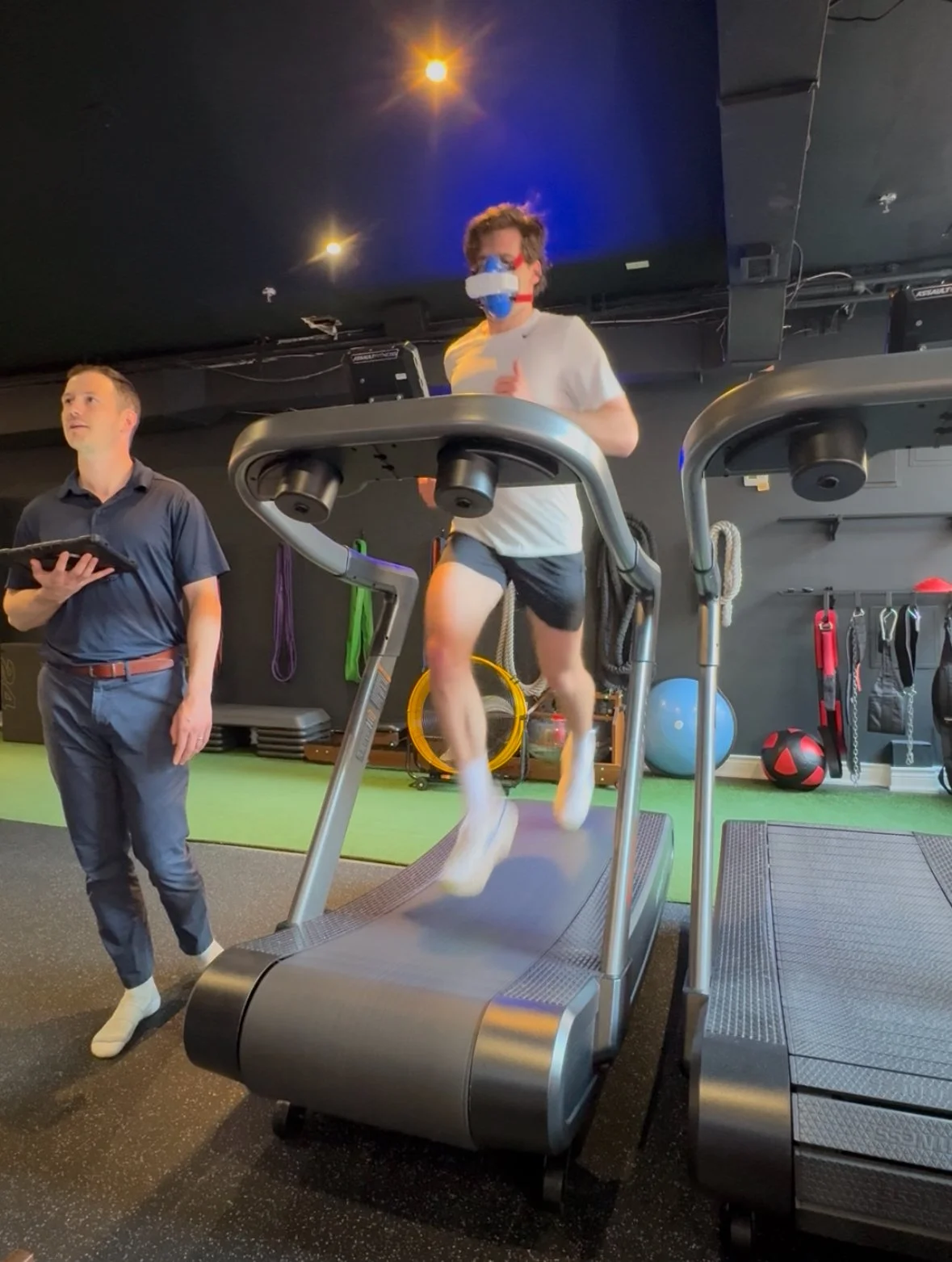
Why Test With Dr. Steven Murray?
A clinical and performance-based approach to running assessment
Dr. Steven Murray is a chiropractor in downtown Toronto with a background in exercise physiology, rehabilitation, and performance testing. His approach combines clinical assessment, movement analysis, exercise rehabilitation, and practical training guidance.
The goal is not to sell every runner on changing their form. The goal is to help you understand what is relevant, what is probably not worth worrying about, and what steps are most likely to help you run with less pain and more confidence.
This approach may be especially useful if you want someone who understands both injury management and performance training.
Frequently Asked Questions
Still have questions? Take a look at the FAQ or reach out anytime. If you’re feeling ready, go ahead and book an appointment.
-
No. Many runners book because they are dealing with pain, but you can also book if you want to understand your running mechanics, improve efficiency, or make better training decisions before a problem develops.
-
No. A shoe store gait analysis is usually focused on footwear. A clinical running analysis looks at your running mechanics, symptoms, training history, strength, mobility, and load tolerance. Shoes may be discussed, but they are only one part of the picture.
-
Only if there is a clear reason to. The goal is not to force every runner into an idealized running style. Sometimes a small cue or cadence change is useful. Other times, the bigger priority is strength, load management, recovery, or training structure.
-
Bring your usual running shoes and comfortable clothing that allows you to run and move. If you have a current training plan, recent race goals, or information about your weekly mileage, bring that as well.
-
It can help identify factors that may be contributing to those issues. The assessment does not diagnose based on video alone, but it can provide useful information about mechanics, training load, strength, and capacity.
-
Yes. For runners who want a more complete performance profile, running analysis can be combined with VO₂max testing or other performance testing services.
-
VO2max testing is conducted at Thrive Longevity training with is a partner clinic of Back in Balance Clinic. The address is 518 Yonge St, Toronto, ON M4Y 1X9.