
Why your wearable is not accurate enough to know your VO₂max
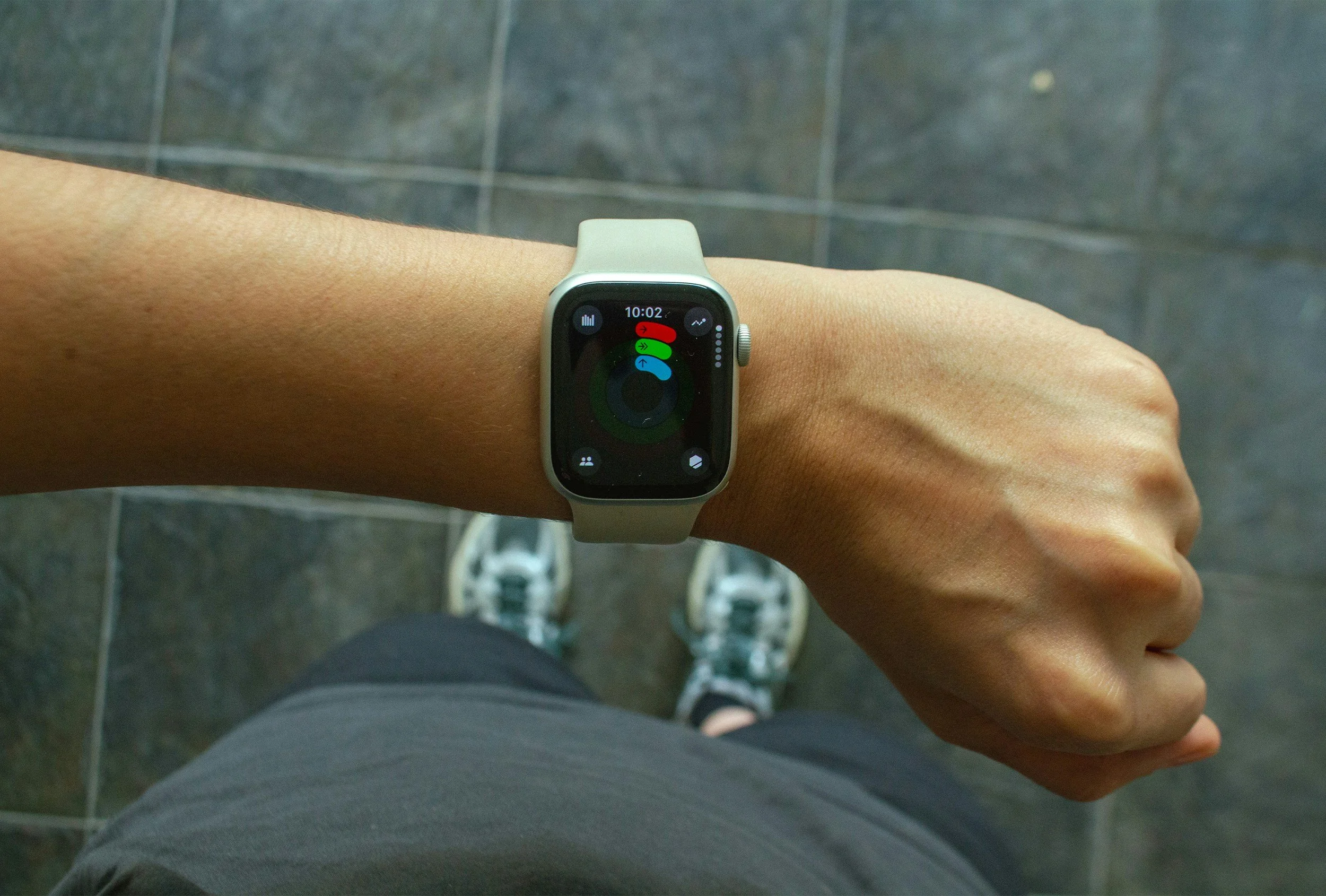
I love a wearable. Personally, I wear my Garmin Epix 2 every time that I leave the house to do a run, workout or race. I can’t live without it, and it gives invaluable information when it comes to my training. However, are there some things that are more hype than help? From Garmin to Apple Watch to Whoop is seems like every company is coming out with a wearable that promises more data, more insight, and increasingly large promises for what their product can do for your long-term health. But are these claims justified? In the case of VO₂max, it seems like they are overpromising and under-delivering.
What is your VO₂max?
Your VO₂max is a measure of the maximal oxygen delivery and utilization from your cardiorespiratory system to your muscles during exercise. With more and more research coming our every month, it is becoming increasingly more accepted that VO₂max is a predictor of not only athletic performance, but also healthspan and longevity as a high VO₂max is consistently predictive of a reduced all-cause mortality across every decade.
At its core, it comes down to two things:
How much oxygen you can deliver (cardiac output)
How much oxygen you can use (muscle extraction)
If you want an in-depth dive into what factors influence VO₂max, how VO₂max is measured and the physiology behind the number, please go and read the blog post on VO₂max explained.
How is my watch or wearable estimating my VO₂max?
Your watch or wearable is estimating your VO₂max through an algorithm where it is taking your heart rate, age, body size and exercise intensity and using a predictive formula to estimate what your VO₂max is. It is worth noting: wearable technology is not capable of directly measuring VO₂max. In order to do that, it must be done in a lab with specialized equipment capable of measuring the oxygen intake and utilization through the air you are breathing during exercise. In our clinic, we use a device called the VO₂Master for this testing.
The problem with using your wearables estimate of VO₂max is that it is inaccurate to the point of being clinically quite useless, here are the main problems:
Problem 1: Heart rate is an unreliable proxy for metabolic demand
Wearables make the assumption that heart rate and VO₂ are correlated tightly to one another, which is true for the most part. However, there are some conditions where that relationship starts to breakdown and will give unreliable VO₂max estimates. These include:
Cardiac drift. Heart rate will gradually increase at a constant work rate above LT2 even without further increases in VO₂.
Exercising in hot, arid conditions will increase heart rate relative to work rate.
Dehydration, lack of sleep, sickness and stress will all alter the heart rate response to exercise.
Caffeine and other stimulates increase heart rate.
Altitude will increase heart rate relative to work rate.
Day to day changes in heart rate will also alter the relationship.
Therefore, if you happen to do a workout to train your VO₂max on a day where you did not sleep well, it is abnormally hot and dry, and you were a little dehydrated, your heart rate response is going to be increased relative to your work rate and your wearable will underestimate your VO₂max.
Problem 2: Wrist-based wearables are notoriously bad at accurately measuring heartrate
Most wearables use optical sensors on the wrist to measure heart rate via changes in local blood flow. While these are fairly accurate at rest, at maximal exercise intensities (like those when you are trying to measure your VO₂max), optical sensors become unreliable in their ability to accurately track heart rate.
Optical heart rate sensors:
Struggle with motion artifact at exercise intensities (running, interval training, swimming, etc)
There is a lag in wrist-based heart rate during rapid intensity changes
Optical sensors accuracy are affected by skin tone, temperature, and fit of the wearable.
If your wearable is getting poor HR data it is going to give you a poor VO₂max estimate. Chest straps improve this problem as they are more accurate, but most users rely on wrist sensors for their wearables. The average error in wrist worn heart rate monitors is between 5-15 bpm (that is a lot).
Problem 3: They assume population-average physiology.
VO₂max estimates from wearables use population level-data averages to calculate an approximate VO₂max as if you were an average person. However, not everyone is average.
It is assuming that based on your heart rate and exercise intensity, that you have an average:
Level of muscle mass
Stroke volume (how much blood your heart pumps per beat)
Exercise economy (running technique, etc)
Lactate dynamics (lactate production and clearance).
While these estimates allow the app to give you a VO₂max number that is going to be in the right ballpark, it is not going to be accurate enough to make health-related decisions, especially if you are not an "average" athlete.
For example: If you are a high-level swimmer but are wearing your watch to run, it is going to underestimate your VO₂max because your running economy may not be as good as a runner in similar shape to you. Because your efficiency is less, your pace is going to "look" slow for how big your engine actually is. Very efficient runners are going to have their VO₂max overestimated as they spend less energy for a given pace vs. the average person.
Problem 4: Running economy and biomechanics aren’t captured well

This related to the last point, where wearables are not taking into account the economics of running during your workout as it relates to your pace for a given heart rate. Factors that increase or decrease the relative effort of a run compared to what the watch is assuming is going to have a large impact. These include factors such as:
Wind
Ice, snow or trails
Altitude
Hills (unless the GPS data is perfect in your area)
Biomechanical efficiency of the runner
Foot strike and stiffness
Two people with comparable VO₂max numbers can run at very different speeds. Similarly, people running at the same speed can have very different VO₂max numbers. This is commonly seen at the highest level of running where most runners have a very similar VO₂max and max heart rates at elite levels but there is still a wide range of running performance.
Problem 5: Using Submaximal data to estimate maximal exercise capacity
Very rarely are most people doing specific workouts to determine their VO₂max and lactate thresholds while wearing their wearable. Most of the time, wearables are estimating VO₂max from submaximal efforts while people do their regular exercise routine, then extrapolate to an estimated maximal exercise capacity.
This estimation introduces error because of a few factors:
The HR–VO₂ relationship is not perfectly linear. It will start to plateau at maximal heart rates, and unless you get to your maximal heart rate your wearable is guessing at numbers.
Max HR is often estimated (and often wrong). For example, my watch estimates my max heart rate to be 190 bpm based on my age, but my actual maximum heart rate is 198 as measured by a chest strap doing maximal exercise. If max HR is off by even ~5–10 bpm, VO₂max estimates can shift meaningfully.
Problem 6: Algorithm opacity and inconsistency
Companies do not disclose what formula they are using in the calculation of VO₂max, and it is assumed that each company has a different formula. Brands such as Garmin, Apple, WHOOP, and Polar all using different equations means that we have no way of checking what assumptions they are making when it comes to VO₂max predictors and trying to reconcile any errors. In addition, they can give meaningfully different VO₂max values for the same person, because:
Different assumptions on what is "average"
Different weighting of HR vs pace
Different filtering of “valid” workouts
All of which we have no control over, it all happens in the background.
So what does this mean?
What this means is that your wearable is an OK metric to track if your VO₂max is increasing or decreasing, but the absolute number is pretty irrelevant. The more you wear your wearable, the arguably closer that the prediction algorithms should get to the correct answer, but clinically they are still too variable to be overly helpful.
This is where lab testing comes in. In the lab, we are not estimating, we are measuring. We are taking breath by breath measurements of exactly how much oxygen you are consuming and using to get an actual measure of your maximum heart rate, VO₂max, metabolism and training zones so that we can give you accurate and actionable advise when it comes to planning your training and long- term longevity strategies.
If you are someone that values being accurate and complete when it comes to making health related decisions, click below to book your online testing battery and take charge of your longevity.