
VO₂max Explained: What It Is, How It’s Calculated, and Why It Matters
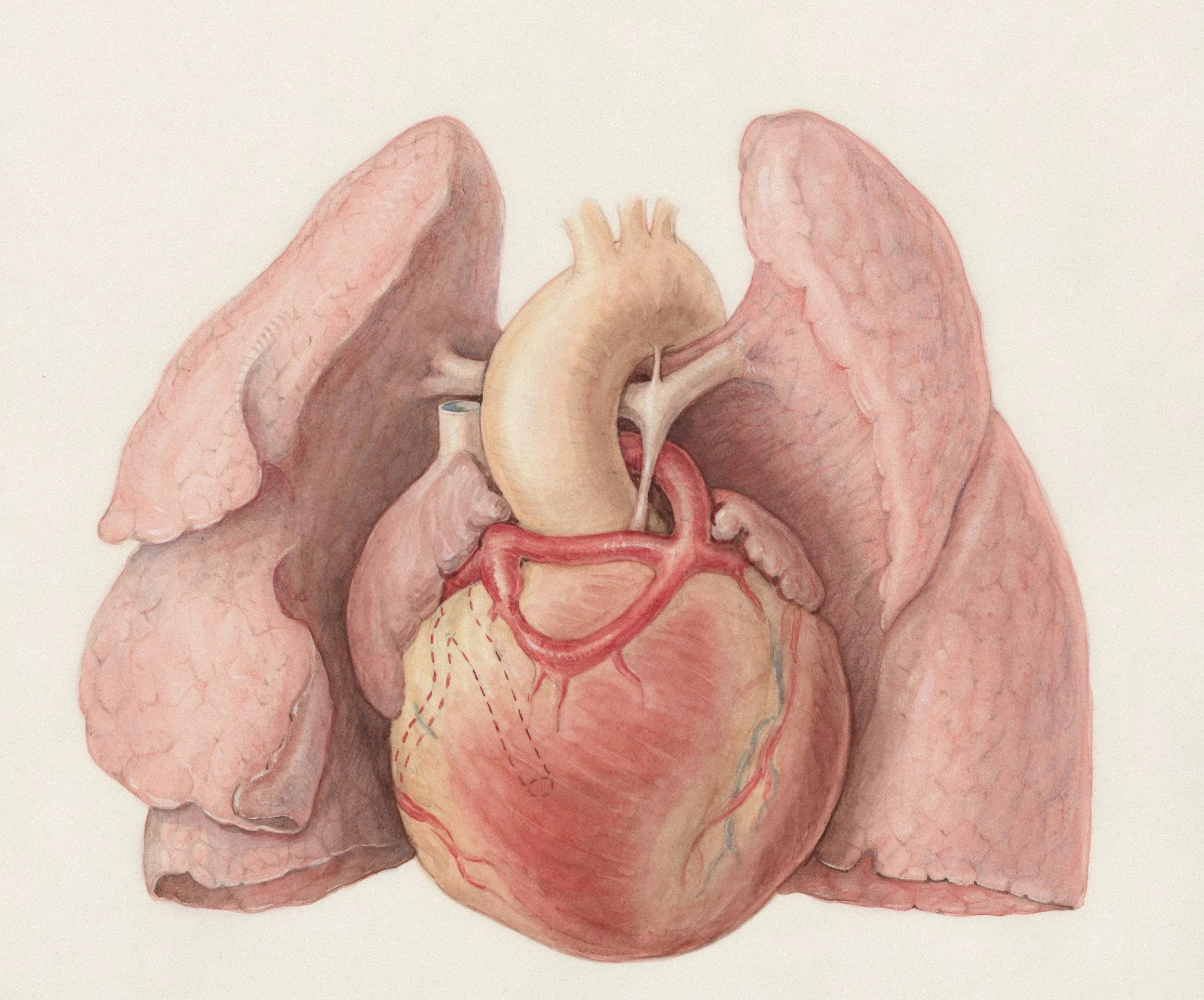
VO₂max is all the rage in the longevity space right now. You cannot go on Instragram, listen to a podcast, or read something on Substack without hearing about VO2max and why it is so important for your long- term health to have a high one. However, one thing that gets lost is exactly what is VO₂max measuring, why it is a good longevity measure, and what are the limitations of VO₂max. The more you can understand the physiology behind the components of VO₂max, the more you will understand how to optimize your training around improving it, and sniff out the truth from the exaggerated claims from the wellness influencer community.
VO₂max: an integrated measure of cardiorespiratory function
VO₂max is one of the most powerful metrics that you can measure in exercise physiology when it comes to health and performance. From elite athletes to is regular people, VO₂max is an integrated measure of how well your heart (cardiovascular system), lungs (respiratory system) and muscles (metabolic system) function. It reflects your body’s ability to take in, transport, and use oxygen during maximal exercise. While it’s often associated with endurance athletes, VO₂max is just as relevant for long-term health, disease prevention, and overall physical capacity.
In fact, cardiorespiratory fitness, which is measured most accurately by VO₂max, is one of the strongest predictors of all-cause mortality- outperforming traditional risk factors like smoking, hypertension, and diabetes in some studies.
But what actually determines a person’s VO₂max?
What Is VO₂max?
VO₂max is the maximum rate at which your body can deliver and consume oxygen during intense exercise. It is typically expressed in one of two ways:
Absolute terms: Liters per minute (L/min), with a normal range of 1.5 to 3.5 L/min.
Relative terms: Milliliters per kilogram per minute (mL/kg/min), with a normal range of 25-40 mL/kg/min.
The relative value is more commonly used because it accounts for body weight, allowing comparisons between individuals of different body shapes and sizes.
We are going to get a little into the weeds of some exercise physiology, but I think understanding the underlying principles of VO₂max is going to greatly aid in the understand of why it is so important, and help you in your training in how to improve it efficiently.
Physiologically, VO₂max is calculated using the Fick Equation:
VO₂ = Q (a - vO₂ diff) OR VO₂max = HR * SV * (a - vO₂ diff)
Where:
VO₂ = oxygen consumption
Q = cardiac output (which is the product of heart rate × stroke volume)
(a - vO₂ diff) = arteriovenous oxygen difference
This equation tells us that VO₂max is determined by two main factors:
How much oxygen your body can deliver to tissues (cardiac output)
How much oxygen your muscles can extract and use (peripheral utilization)
Component 1: Cardiac Output (Delivery)
Cardiac output is the volume of blood your heart pumps per minute. Your cardiac output is determined by two factors:
Heart rate (how many times your heart beats per minute)
Stroke volume (how much blood your heart pumps per beat)
Maximum heart rate is largely determined by your age and genetics, and will not appreciably change with training. Therefore, almost all of the adaptions in cardiac output that occur with training are from increases in stroke volume.
With training:
The left ventricle enlarges (through a process called eccentric hypertrophy)
Overall blood volume increases
Cardiac contractility improves
Through enlargement of the heart, having more blood volume to pump, and increased force of contraction with each pump, cardiovascular training increases maximum stroke volume and in turn maximum cardiac output and VO₂max.
Component 2: Arteriovenous Oxygen Difference (Utilization)
Arteriovenous oxygen difference (a - vO₂ diff) is the second component of the Fick equation and reflects how much oxygen is extracted by the muscles. The a - vO₂ difference is just the difference between the concentration of oxygen as it comes out of the heart before it enters the working muscle, and how much oxygen is left in the blood after the muscle has taken up as much as it can. The a - vO₂ difference is also influenced by several factors:
Capillary density (more capillaries = more oxygen deliver to the muscles)
Mitochondrial density (More mitochondria = greater ability to burn oxygen for energy)
Enzyme concentration (more enzymes in the mitochondria= greater ability to burn oxygen for energy)
Muscle fibre type (Type I (slow-twitch) fibers are more oxidative and can use more oxygen than type II fibres)
The more capillaries, type I muscle fibres, more mitochondira in those muscle fibres, and more enzymes in those mitochondria, the more oxygen-burning capacity those muscles have. The more oxygen they can burn, the more oxygen the muscles will pull out of the blood, and the higher the potential VO₂max.
An Integrated System: The Oxygen Transport Cascade
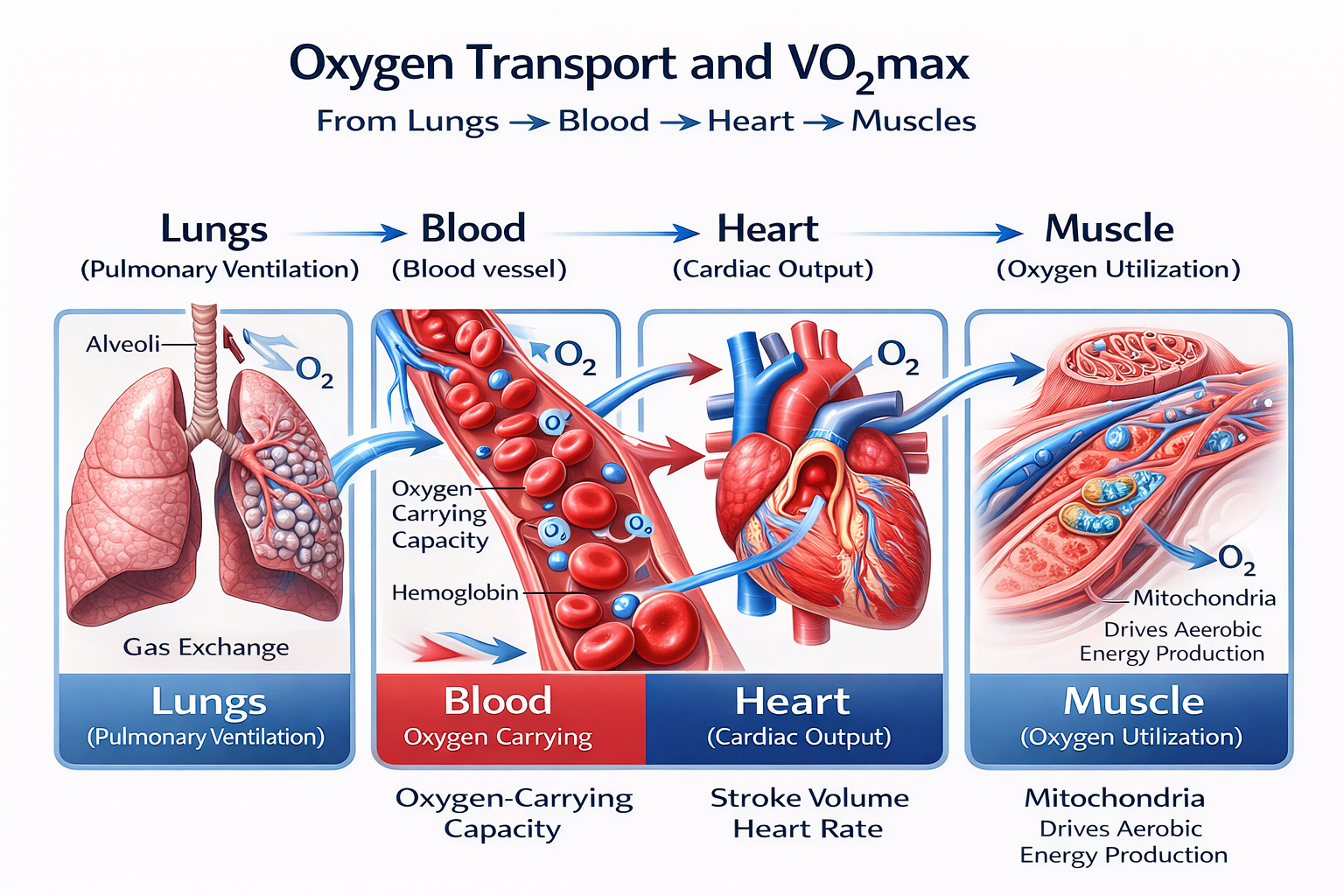
VO₂max is not just a measurement of one thing—it’s a measurement of an interaction of multiple physiological systems. Because it is a measure of oxygen’s delivery and utilization in exercising tissues, VO₂max is an integrate measure of the entire cascade of oxygen transport:
Oxygen enters the lungs via respiration
Oxygen diffuses into the bloodstream from the lungs
Oxygen binds to hemoglobin in the blood
The blood is transported from the lungs to the heart
The heart pumps blood to deliver oxygen to working muscle
Muscles extract oxygen and use in mitochondria to generate energy
The reason that VO₂max is such a powerful metric is that a limitation at any point in this cascade reduces overall VO₂max. That means you need to have multiple healthy, robust systems in order to have a good VO₂max. Some examples of things that would lower VO₂max:
Lung disease preventing oxygen from getting into the blood stream
Anemia reducing the number of red blood cells for oxygen to bind to
Reductions in the hearts ability to efficiently pump blood
Lack of muscle mass that can be used for exercise
Inefficient muscles that lack high aerobic capacity to use oxygen
Any break in the system is going to cause a bottleneck and limit VO₂max. This is why its a good longevity measure. It is the only longevity measure? Of course not. But it is certainly a pretty good start.
Why VO₂max Matters Beyond Performance
VO₂max is not just about elite endurance performance or people that want to try and run their first marathon—it reflects the body’s overall capacity to deal with stress far beyond that which is found in a gym.
A higher VO₂max is associated with:
Lower cardiovascular disease risk
Better metabolic health ( improved insulin sensitivity)
Improved resilience to illness
Greater functional independence with aging
From a clinical perspective, VO₂max represents physiological reserve—how much capacity you have beyond your baseline needs. This is the reserve that you can call upon when your body runs into a new challenge. This could be an unexpected surgery that you need to recover from, and illness that lands you in the hospital, or an injury that occurs when you age that prevents you from being able to exercise for a period of time. The more physiological reserve that your body has, the larger the buffer you have for function decline before you get into a “danger” zone when your heath becomes problematic, you lose your independence, and you are no longer able to do the things that you want to do in life.
Final Takeaway
VO₂max is a systems-level metric. It is not just about your lungs or your fitness—it reflects how well your entire body works together produce energy in periods of stress.
At its core, it comes down to two things:
How much oxygen you can deliver (cardiac output)
How much oxygen you can use (muscle extraction)
Understanding these components allows for more targeted training, better clinical interpretation, and more meaningful tracking over time.
If you’re serious about performance, longevity, or understanding your physiology at a deeper level, measuring VO₂max directly—not estimating it—is one of the most valuable assessments you can do.