
From head injury to brain dysfunction: the molecular mechanisms of a concussion
Understanding the Neurometabolic Cascade of Concussion
Concussions are often called “mild” traumatic brain injuries, but there is nothing mild about what happens inside the brain after impact. Even when imaging such as CT or MRI appears normal, complex physiological changes are occurring at the cellular level.
At Back in Balance Clinic, through our Virtual Concussion Clinic for residents of Ontario, we regularly work with patients who are frustrated because their symptoms persist despite being told everything “looks fine.” The reason is simple: concussion is primarily a metabolic and functional brain injury, not a structural one.
This article explains—clearly and accurately—what happens in the brain after a concussion, why symptoms occur, and why proper management is essential for recovery.
The Neurometabolic Cascade: the process behind concussion symptoms.
A concussion triggers a series of biochemical and physiological events known as the neurometabolic cascade. This cascade affects how brain cells function, communicate, and recover. When you sustain a head injury, there is a disruption in the membrane of brain cells, which allows molecules to leak in and out of the cell. This leakage leads to dysfunction and damage of the nerve cells, and causes a neurometabolic cascade of problems that we experience as a concussion.
Therefore, rather than a single injury, a concussion is best understood as a temporary energy crisis in the brain, involving:
Disrupted ion (electrolyte) balance
Altered blood flow
Impaired energy production
Brain inflammation
Changes in brain signalling patterns
After a concussion, these processes contribute to the common and wide-ranging concussion symptoms such as headache, brain fog, confusion, fatigue, trouble concentrating, sensitivity to light and sound and many others.
In the following blog, we are going to briefly discuss the different components of the neurometabolic cascade and how each of them contributes to the brain’s energy crisis after a concussion.
1. Imbalance and Brain Over-Excitation

Immediately after a concussion, the brain experiences a sudden disruption in electrical balance due to the shearing forces that neurons experience as the brain shakes within the skull at impact.
The mechanical forces of a head injury cause:
Potassium to leak out of neurons
Sodium and calcium to rush into neurons
Excess glutamate (an excitatory neurotransmitter) to be released
These three processes create a state of over-excitation throughout the brain. It is similar to if you were to flip on every light in your house at the exact same time, overloading the system and blowing the circuit breaker.
Why this matters:
Brain cells (neurons) fire excessively and randomly burning through the brain’s energy stores
Brain communication becomes inefficient, and pathways become dysfunctional
The brain enters a state of metabolic crisis where it no longer has enough energy to carry out all of its normal functions properly.
2. The Energy Crisis After Concussion
Once the brain becomes overexcited, it attempts to restore balance by putting all of the ions and neurotransmitters back into their correct places. This process requires large amounts of energy (ATP) which the brain is already short on.
Therefore, a concussion creates a dangerous mismatch:
✔ Energy demand increases
✖ Blood flow decreases
✖ Mitochondrial function is impaired, limiting the brain’s ability to generate new energy.
The result is a metabolic energy crisis.
This explains why:
Cognitive tasks feel exhausting
Physical activity worsens symptoms
Rest becomes essential for recovery
At Back in Balance clinic, we use our Virtual Concussion Clinic to carefully guide return-to-work, school, and exercise plans rather than allowing symptom-limited activity too early.
3. Altered Cerebral Blood Flow
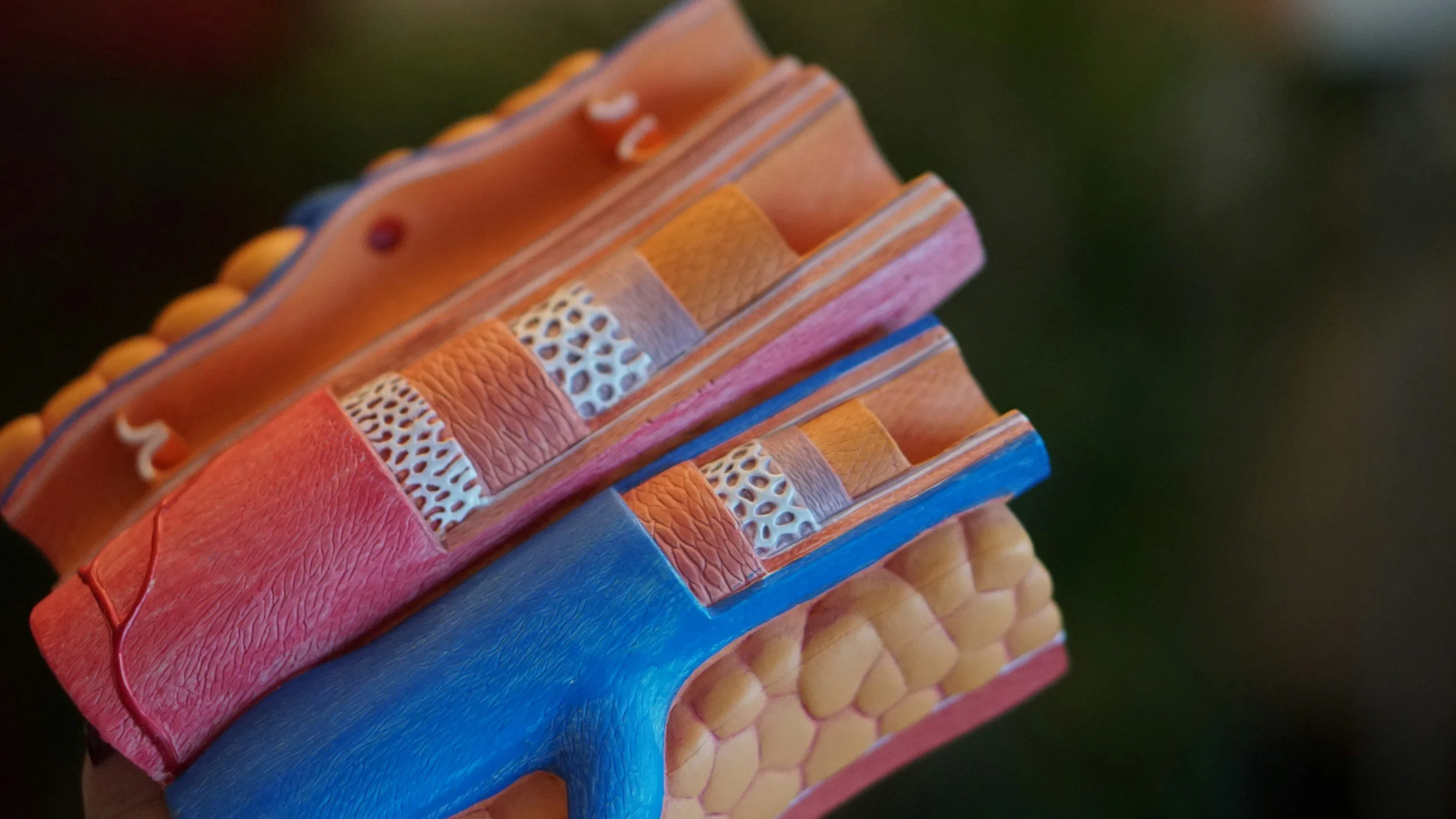
As just previously mentioned, the metabolic crisis in the brain following a concussion is made worse by the fact that there are alterations in the blood flow to various parts of the brain following a concussion. Studies in concussion patients show:
Reduced brain (cerebral) blood flow
Poor oxygen delivery
Impaired vascular responsiveness
This combination of reduced energy availability and reduced energy generation capacity contributes to:
Brain fog
Exercise intolerance
Head pressure
Fatigue
Even when symptoms improve, blood flow abnormalities can persist, which is why graded and monitored rehabilitation is so important.
4. Impaired Brain Plasticity and the Role of Myelin
During the 30 day period after a concussion, there is a reduction in the ability of the brain to form new brain pathways and an inefficiency of brain pathways that are already established. Molecular studies into the brain-specific effects of a concussion show that there are synaptic (communication) changes in the brain cells due to the neurometabolic cascade.
Synaptic changes include:
Altered neurotransmitter activity
Reduced efficiency of learning pathways
Slower information processing
Furthermore, these changes can affect children more severely than adults because of the role that myelin plays in protecting the brain cells against damage. Myelin is the insulation around nerve fibers that allows faster communication between neurons. However, the brain is not fully myelinated until ~age 20, with research showing:
Unmyelinated or developing brain tissue is more vulnerable to neurometabolic changes
Youth and young adults may require longer recovery
Disruption slows reaction time and coordination
This is one reason concussions in children and adolescents require careful monitoring after a concussion, and we are even more conservative in allowing them to return to school and contact sports as to not overload the brain too early.
5. Brian cell death
Now for some good news: In most single, uncomplicated concussions, there is little to no immediate cell death. While there are a lot of functional brain changes, with time and proper rehabilitation, the brain will fully recover from mild traumatic brain injuries. While this is great news, it should still be kept in mind that:
Neurons may function poorly for extended periods in certain people leading to longer recovery times.
Repeated concussions increase injury risk
Inadequate recovery can worsen long-term outcomes
Research shows that returning to activity before metabolic recovery significantly increases vulnerability to further injury.
This is why modern concussion care emphasizes biological recovery, not just symptom resolution.
Why Symptoms Can Persist After a Concussion
One of the most important findings in concussion research is this:
Symptoms often resolve before the brain has fully recovered.
Advanced imaging shows that metabolic and connectivity changes can persist long after a patient feels “better.”
This explains:
Flare-ups with physical or cognitive exertion
Increased risk of re-injury
Prolonged post-concussion symptoms
At our virtual concussion clinic, recovery plans are based on physiological healing, not just symptom checklists.
What This Means for Concussion Recovery
A concussion is not just a bump on the head—it is a complex neurological injury requiring proper management.
Key takeaways:
✔ Concussion disrupts brain metabolism
✔ Rest and gradual activity are medically necessary
✔ Returning too early increases risk
✔ Recovery timelines are individual
✔ Proper guidance improves outcomes
Expert Concussion Care in Ontario

At Back in Balance Clinic, we offer Virtual Concussion Care in Ontario, providing evidence-based concussion assessment and management for patients across Ontario. Virtual care allows timely evaluation, education, and rehabilitation planning without unnecessary delays.
Whether your concussion occurred during sport, work, a motor vehicle accident, or a fall, proper diagnosis and guided recovery are essential.